
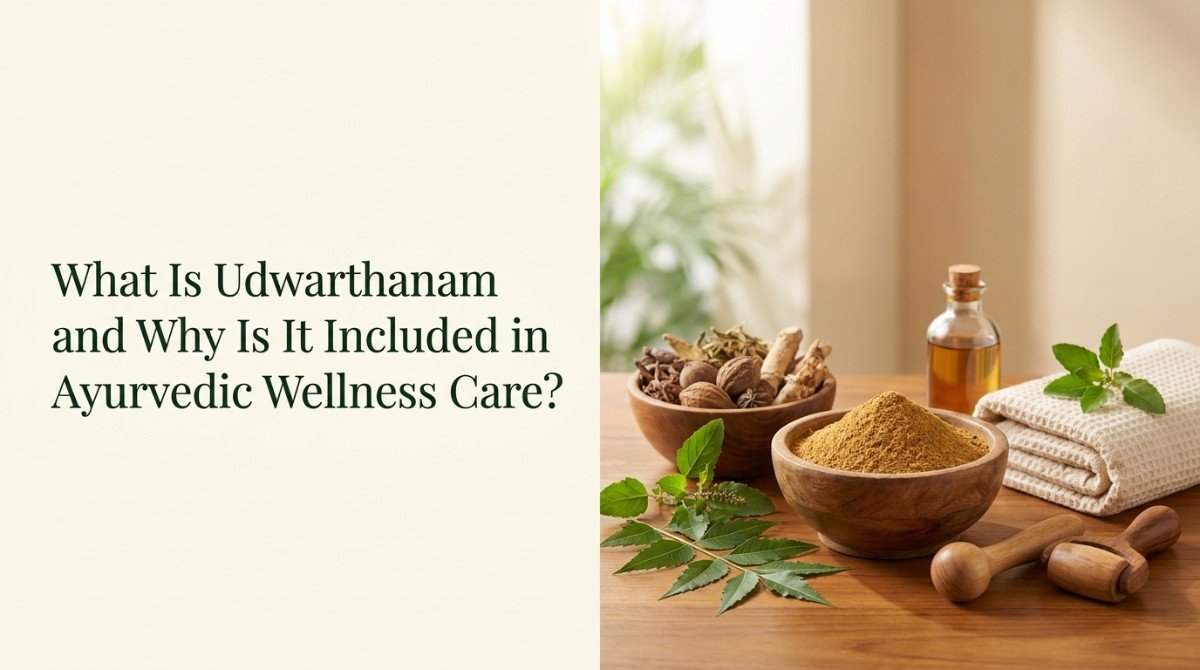
What Is Udwarthanam and Why Is It Included in Ayurvedic Wellness Care?
What Is Udwarthanam and Why Is It Included in Ayurvedic Wellness Care? Udwarthanam is a traditional Ayurvedic therapy that involves the application and massage of herbal powders over the body. It is commonly included in wellness programmes as part of a personalised approach to body care and Ayurvedic routines.
The therapy is performed using selected herbal powders and specific massage movements according to the individual’s needs. Understanding what Udwarthanam involves, why it may be recommended, and how it fits into a wider wellness plan can help you make an informed decision before beginning the therapy.
What Is Udwarthanam?
Udwarthanam is an Ayurvedic powder massage therapy. The term refers to the upward application or massage of herbal powders over the body. Unlike an oil massage, Udwarthanam uses dry or appropriately prepared herbal powders. The practitioner applies the powder to selected areas and uses specific movements as part of the traditional procedure.
The exact method can vary depending on the person’s requirements and the Ayurvedic approach being followed. The choice of herbal powder, duration, areas of application, and frequency should be decided by a qualified Ayurvedic professional. Udwarthanam is not simply a body scrub. It is a traditional Ayurvedic therapy that forms part of a broader approach to wellness and body care.
Why Is Udwarthanam Included in Ayurvedic Wellness Care?
Udwarthanam may be included in Ayurvedic wellness care when a practitioner considers it suitable for the person’s needs. Ayurveda traditionally uses different therapies for different purposes, so not every therapy is appropriate for everyone. The therapy can be incorporated into a wellness programme alongside other Ayurvedic practices.
The overall plan may consider daily routine, diet, physical activity, sleep, stress, and other individual factors. Rather than treating Udwarthanam as an isolated procedure, it can be understood as one component of a personalised Ayurvedic wellness routine.
How Is Udwarthanam Performed?
The procedure generally begins with preparing the person and selecting the appropriate herbal powder according to the planned therapy. The powder is then applied over the body using specific massage movements. Traditional Udwarthanam commonly involves movements directed upward rather than the downward movements associated with some other forms of massage. The practitioner controls the pressure and technique according to the area being treated and the person’s requirements.
After the massage, the practitioner may recommend suitable post-treatment care. The exact steps can vary depending on the individual treatment plan. Because the procedure involves direct application and massage, it is important that it is performed by a trained professional rather than being approached as an ordinary home body scrub.
What Herbal Powders Are Used in Udwarthanam?
Different herbal powders may be used depending on the Ayurvedic assessment and the purpose of the therapy. The ingredients can include combinations of herbs and other traditionally used plant-based materials. The selection should not be assumed to be the same for every person.
The practitioner may consider factors such as the person’s body constitution, current concerns, skin condition, and overall wellness plan before deciding on the preparation. This is one reason personalised consultation is important. Using an ingredient simply because it is commonly associated with Udwarthanam may not be appropriate for every individual.
What Is the Difference Between Udwarthanam and Ayurvedic Oil Massage?
Udwarthanam and Ayurvedic oil massage are different therapies. Udwarthanam primarily involves herbal powders, while oil massage uses suitable oils. The techniques and purpose of the therapies can also differ. The texture and sensation are different as well. Udwarthanam generally provides a dry powder-based massage experience, whereas oil massage leaves the skin with an oily application.
Neither therapy should automatically be considered suitable for everyone. The choice depends on the individual’s requirements and the Ayurvedic treatment plan. A practitioner can explain which therapy is being recommended and why it has been included in the wellness programme.
What Are the Traditional Uses of Udwarthanam?
Udwarthanam has traditionally been associated with body care and certain Ayurvedic wellness practices. It is also traditionally used as part of routines intended to support a feeling of lightness and freshness. Some Ayurvedic practices incorporate Udwarthanam into programmes that focus on body composition and routine-based wellness. However, individual outcomes can vary.
It is important not to view the therapy as a guaranteed method for weight loss or as a substitute for medical treatment. Any specific health concern should be discussed with an appropriately qualified healthcare professional. The role of Udwarthanam should therefore be understood within the context of an individual’s complete Ayurvedic care plan.
Can Udwarthanam Be Part of Pre-Bridal Wellness Care?
Udwarthanam may be included in a pre-bridal wellness programme when it is considered appropriate for the individual. Bridal preparation often involves attention to skin care, hair care, relaxation, daily routine, and general wellness. An Ayurvedic programme may combine different therapies according to the person’s requirements.
If Udwarthanam is recommended, the timing and frequency should be discussed during consultation. It is better to plan the therapy as part of an organised routine rather than introducing several new treatments close to the wedding. Pre-bridal care should always remain personalised. A therapy that is suitable for one person may not necessarily be appropriate for another.
How Can Udwarthanam Support a Wellness Routine?
Ayurvedic wellness care often looks beyond a single treatment. Udwarthanam can be included as one part of a broader routine that may involve suitable therapies, food habits, daily activities, rest, and lifestyle guidance. The therapy may also provide a structured period of self-care. Taking time for planned wellness sessions can be useful when incorporated into a balanced routine.
However, wellness should not depend on one procedure alone. Regular sleep, balanced nutrition, appropriate physical activity, hydration, and stress management remain important parts of general wellbeing.
Is Udwarthanam Suitable for Everyone?
No single Ayurvedic therapy should automatically be considered suitable for everyone. A person’s skin condition, health history, sensitivity, current treatments, and individual requirements should be considered before starting a therapy. People with certain skin problems, injuries, infections, or other health concerns may need special consideration.
Anyone who is pregnant, taking medication, or receiving treatment for an ongoing health condition should disclose this information during consultation. A qualified practitioner can determine whether the therapy is appropriate and whether any modifications are required.
Why Is Consultation Important Before Udwarthanam?
Consultation helps establish whether Udwarthanam is suitable for your particular needs. During a consultation, you can discuss your current health, skin condition, daily routine, previous therapies, medicines, allergies, and the reason you are considering the treatment.
The practitioner can then explain the proposed procedure, the type of preparation being considered, and how it may fit into your wider wellness plan. This approach is particularly important when Udwarthanam is being considered as part of a larger Ayurvedic programme. Each therapy should have a clear reason for being included.
What Should You Expect During Udwarthanam?
The experience can vary depending on the practitioner, preparation, technique, and treatment plan. Because herbal powder is used instead of oil, the sensation can be different from an oil massage. The practitioner uses specific movements to apply and massage the powder over the selected areas.
You may experience the texture of the powder against the skin during the procedure. The practitioner should explain the process before beginning and make sure you understand what to expect. If you experience unusual discomfort or irritation during the therapy, communicate this to the practitioner immediately.
What Should You Do After Udwarthanam?
Post-treatment instructions can vary according to the type of therapy and your individual care plan. Your practitioner may provide guidance about bathing, food, activity, rest, or other routine considerations after the session.
It is useful to follow the instructions given during consultation rather than combining the treatment with unrelated products or procedures without professional guidance.If you notice persistent irritation, significant discomfort, or another unexpected reaction, seek appropriate professional advice.
How Often Can Udwarthanam Be Done?
There is no single frequency that applies to everyone. The number and timing of sessions depend on why the therapy is being recommended, the person’s individual condition, and the overall Ayurvedic treatment plan.
Some wellness programmes may include a planned series of sessions, while others may use the therapy differently. Rather than deciding the frequency based on another person’s routine, discuss the appropriate schedule with your Ayurvedic practitioner.
What Should You Discuss Before Starting Udwarthanam?
Before beginning Udwarthanam, explain your current skin and health condition clearly. Mention any allergies, medications, ongoing treatments, previous reactions, injuries, or other concerns that may be relevant. You can also discuss why you are considering the therapy.
Your goal may be general wellness, body care, inclusion in a pre-bridal programme, or another reason. Understanding the purpose of the therapy helps you have realistic expectations and allows the practitioner to plan care around your individual requirements.
Common Mistakes to Avoid Before Udwarthanam
One common mistake is choosing a therapy only because someone else had a positive experience with it. Individual requirements can be different. Another mistake is using herbal powders without understanding the ingredients or whether they are suitable for your skin. Traditional does not automatically mean that every preparation is suitable for every person.
It is also important not to ignore an existing skin condition or ongoing medical treatment. Such information should be discussed before beginning the therapy. Finally, avoid expecting one session to provide a complete solution to a long-term wellness concern. Ayurvedic wellness care is generally planned according to individual needs and may involve several aspects of daily life.
How Does Udwarthanam Fit Into Ayurvedic Wellness Care?
Udwarthanam can be viewed as one traditional Ayurvedic therapy within a wider wellness approach. Its role depends on why it is recommended and how it fits into the person’s individual care plan. A complete wellness programme may consider body care along with diet, daily routine, rest, physical activity, stress management, and other suitable Ayurvedic practices.
This broader approach helps keep the focus on overall wellbeing rather than placing all expectations on one therapy. Before starting Udwarthanam, a consultation can help you understand the procedure, its purpose, preparation, and place within your wellness routine.