
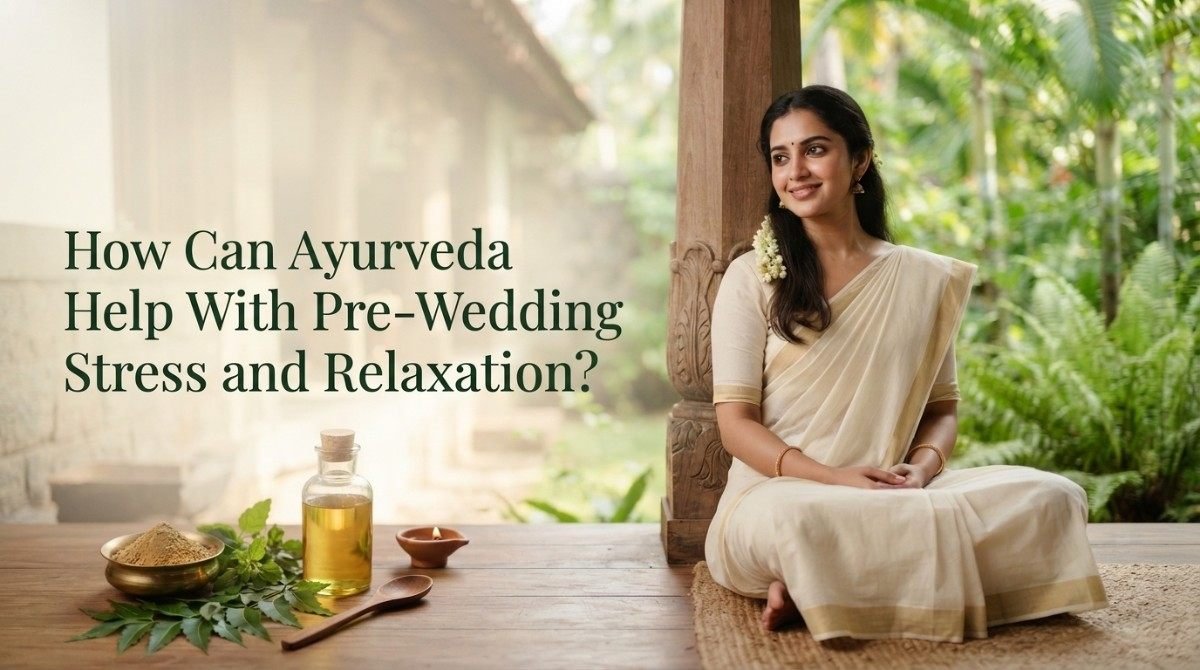
How Can Ayurveda Help With Pre-Wedding Stress and Relaxation?
How Can Ayurveda Help With Pre-Wedding Stress and Relaxation? Ayurveda can support a calmer pre-wedding routine through traditional wellness practices, relaxation therapies, healthy daily habits, suitable food, proper rest, and personalised care. A wedding is a happy and important event, but the preparation period can also become tiring. There may be many plans to make, people to meet, clothes to choose, functions to organise, and decisions to take. When everything happens at the same time, stress can increase.
Ayurveda focuses on creating balance between the body and mind. Before a wedding, simple Ayurvedic practices can be included in daily life to create more time for rest and relaxation. The aim is not only to prepare for the wedding but also to help the bride feel comfortable, refreshed, and mentally calm during the preparation period.
What Is Pre-Wedding Stress?
Pre-wedding stress is the pressure or worry that can happen before marriage. It may come from a busy schedule, family responsibilities, financial planning, social events, shopping, travel, work, or expectations about the wedding.
A person may feel tired even when the wedding is an exciting event. Too many tasks in one day can make it difficult to relax. Some people may also find it hard to sleep properly or maintain regular eating habits.
Common signs of pre-wedding stress may include:
- Feeling tired throughout the day
- Difficulty relaxing
- Poor sleep
- Changes in appetite
- Feeling restless
- Lack of concentration
- Headaches caused by tension
- Feeling overwhelmed by daily tasks
- Less time for personal care
- Irritability or mood changes
Understanding these changes can help a person make time for proper rest and self-care.
How Can Ayurveda Help With Pre-Wedding Stress and Relaxation?
Ayurveda takes a whole-person approach to well-being. It considers daily routine, food, sleep, relaxation, physical care, and mental balance together. During pre-wedding preparation, Ayurvedic wellness practices can help create a more organised and peaceful routine. Depending on individual needs, traditional Ayurvedic therapies, oil applications, gentle relaxation practices, suitable food habits, and lifestyle guidance may be included.
The main purpose is to create time for the body and mind to slow down. Instead of filling every part of the day with wedding activities, a bride can include small periods of relaxation. Simple habits can make a difference when followed regularly.
Why Is Relaxation Important Before a Wedding?
Relaxation is important because wedding preparation can continue for several weeks or months. If a person remains busy without enough rest, tiredness can build up. Regular relaxation gives the body time to recover from a busy day. It also gives the mind a break from continuous planning and decision-making.
Relaxation does not always require a long break. Even 15 to 30 minutes of quiet time can be useful. Reading, sitting quietly, taking slow breaths, listening to peaceful music, or enjoying a gentle self-care routine can provide a break from wedding-related activities.
How Can Ayurvedic Therapies Support Relaxation?
Traditional Ayurvedic therapies may be used as part of a relaxation-focused wellness routine. Depending on individual requirements, different therapies may be selected with suitable guidance. Oil-based therapies are commonly associated with Ayurvedic relaxation care.
Warm herbal oils may be used during certain traditional treatments. The gentle process can provide a calming experience and create dedicated time for rest.The type of therapy, oil, duration, and frequency should be selected according to individual needs rather than following the same routine for everyone.
How Can Oil-Based Ayurvedic Care Support Relaxation?
Oil application is an important part of many traditional Ayurvedic routines. Gentle oil massage can become a peaceful part of pre-wedding self-care when it is suitable for the individual. A calm environment, gentle movements, and warm oil can make the experience relaxing.
It can also give the bride a chance to step away from shopping, planning, phone calls, and other wedding responsibilities. Traditional oil care may be included as part of a wider wellness routine rather than being treated as a quick beauty treatment.
Can Ayurveda Help Create a Better Daily Routine Before the Wedding?
A regular daily routine can make wedding preparation easier to manage. Ayurveda traditionally gives importance to maintaining healthy routines for food, sleep, activity, and personal care. A bride can try to keep regular times for waking, meals, work, relaxation, and sleep. This can help reduce the feeling that every day is unpredictable.
A simple routine may include:
- Waking up at a regular time
- Drinking enough water
- Eating meals at suitable times
- Taking short breaks during busy work
- Spending some time outdoors
- Practising gentle movement
- Limiting unnecessary screen time
- Going to bed at a regular time
- Keeping some quiet personal time
The routine should be realistic. A complicated schedule can become another source of stress.
How Does Sleep Support Pre-Wedding Relaxation?
Sleep is an important part of general well-being. During wedding preparation, late-night planning, phone calls, shopping, social events, and work can reduce sleeping time. Poor sleep can make the next day feel more difficult. A person may feel tired, less focused, or less patient.
Creating a peaceful bedtime routine can help. Try to reduce unnecessary phone use before bed and avoid filling the last part of the day with stressful planning. Going to bed at a regular time and keeping the sleeping area comfortable can also support better rest.
How Can Ayurveda Support Healthy Eating Before a Wedding?
Food is an important part of a healthy daily routine. During busy wedding preparation, people may skip meals or depend on fast food because they do not have enough time. A simple and balanced eating routine can help support energy throughout the day.
Meals can include suitable amounts of vegetables, fruits, whole grains, pulses, and other nutritious foods according to individual needs. Warm, freshly prepared meals may also be preferred in traditional Ayurvedic routines. Instead of making sudden and strict diet changes before the wedding, it is better to follow a practical eating routine that can be maintained comfortably.
Can Hydration Support Relaxation During Wedding Preparation?
Drinking enough fluids is another simple part of daily self-care. Busy schedules can sometimes make people forget to drink water. Keeping water nearby can make it easier to drink regularly throughout the day. Hydration needs can vary depending on activity, weather, food habits, and individual health. Water should be the main choice for regular hydration unless a healthcare professional has advised otherwise.
How Can Breathing Practices Support a Calm Routine?
Slow and mindful breathing can be included in a relaxation routine. When people are busy or worried, they may breathe quickly without noticing it. Taking a few minutes to sit comfortably and focus on slow breathing can create a short mental break.
A simple routine can involve sitting quietly, relaxing the shoulders, breathing slowly, and paying attention to each breath. The practice should feel comfortable and should not involve forcing the breath. If breathing exercises cause discomfort or dizziness, they should be stopped.
How Can Gentle Physical Activity Help During Pre-Wedding Preparation?
Physical activity can be useful when included at a comfortable level. Walking, gentle stretching, yoga, or other suitable activities can provide a break from sitting and planning. A short walk can also give the mind a change of environment. Gentle movement may be easier to maintain than a strict exercise plan during a busy wedding schedule. The aim is to stay active without making the routine exhausting.
Why Is Personal Time Important Before the Wedding?
Wedding preparation often involves many people. Family members, friends, relatives, event planners, and others may be involved in different activities. While social support is valuable, personal time is also important.
A bride can keep a small amount of time each day for herself. This may be used for reading, listening to music, taking a quiet walk, practising breathing, journaling, or simply sitting without doing anything. Personal time does not have to be long. What matters is making it a regular part of the day.
How Can an Ayurvedic Environment Support Relaxation?
The surroundings can influence how easily a person relaxes. A quiet and comfortable environment can make relaxation practices more enjoyable. Soft lighting, clean surroundings, natural elements, gentle music, and pleasant herbal aromas may be included in a relaxation setting when suitable. The goal is to create a peaceful space where the mind can move away from wedding planning for a short time.
How Can Personalised Ayurvedic Care Help Brides?
Every bride has a different routine, lifestyle, food habits, work schedule, and level of wedding-related pressure. Because of this, the same wellness routine may not be suitable for everyone. Personalised Ayurvedic care considers individual requirements before suggesting therapies or lifestyle practices.
A suitable routine may include traditional therapies, relaxation practices, food guidance, sleep habits, activity, and personal care. Professional guidance can help identify which practices are appropriate and how often they should be followed.
When Should Brides Start Relaxation Care?
Relaxation care can be started before wedding preparations become extremely busy. Starting early gives a bride more time to create healthy routines. There is no single starting date that works for everyone. Some people may have several months before the wedding, while others may have only a few weeks.
The focus should be on creating sustainable habits instead of trying to make many changes at the last minute. Starting with simple practices such as regular sleep, healthy meals, hydration, gentle movement, and quiet personal time can make the routine easier to follow.
How Can Brides Manage a Busy Wedding Schedule?
A busy wedding schedule can become easier to manage when tasks are organised. Trying to complete everything at the same time can increase pressure. Making a simple daily list can help separate important tasks from tasks that can wait.
It can also be useful to include relaxation time in the schedule. If relaxation is left until the end of the day, it may be skipped because of tiredness.
A practical schedule can include:
- Important wedding tasks
- Work responsibilities
- Meal times
- Short breaks
- Personal care
- Relaxation time
- Sleep time
A schedule should have enough flexibility for unexpected events.
What Should Brides Avoid When Managing Pre-Wedding Stress?
Trying to make too many sudden changes can increase stress. A bride does not need to completely change her lifestyle just because the wedding is approaching. It is better to avoid extreme diets, excessive exercise, very little sleep, and unplanned wellness treatments.
New skin or body treatments should also not be started without proper guidance, especially close to an important event. The focus should be on safe, comfortable, and consistent care.
Can Ayurveda Support Relaxation After a Busy Wedding Day?
Wedding preparation can continue from morning until evening. After a long day, the body and mind may need time to slow down. A simple evening routine can include a warm bath, gentle stretching, quiet breathing, light reading, or another relaxing activity.
Traditional Ayurvedic care may also be included when suitable and professionally guided. The evening should gradually become quieter so the body can prepare for sleep.
How Can Family Support a Bride’s Relaxation?
Family support can make the pre-wedding period easier. Relatives can help with practical responsibilities so that the bride does not have to manage every task herself. Family members can also respect the bride’s personal time and allow her to rest when needed.
Simple support, such as helping with shopping, organising appointments, managing calls, or sharing household responsibilities, can reduce the number of tasks she needs to handle.
Is Ayurvedic Pre-Wedding Care Only About Stress?
No. Pre-wedding Ayurvedic care can include many areas of daily well-being. It may involve relaxation, personal care, healthy food habits, sleep, daily routine, gentle activity, and traditional wellness therapies.
The purpose is not only to deal with stress. It is also about helping a bride create healthy habits during an important period of life. When these habits are practical and comfortable, they may be easier to continue even after the wedding.
What Makes a Simple Ayurvedic Relaxation Routine Practical?
A good routine should fit into everyday life. If a routine takes too much time or has too many steps, it may become difficult to follow during wedding preparation.
A simple routine could include:
- Regular meals
- Enough water
- Good sleep
- Short periods of quiet time
- Gentle physical activity
- Slow breathing
- Suitable personal care
- Planned relaxation
- Time away from screens
- Traditional Ayurvedic care when appropriate
Small habits followed regularly can be easier to manage than major changes made suddenly.
Why Is Professional Guidance Useful for Ayurvedic Pre-Wedding Care?
Ayurvedic care can be personalised according to individual needs. A qualified professional can understand a person’s routine and suggest suitable practices. This is particularly useful when considering traditional therapies, herbal preparations, oils, dietary changes, or other specific Ayurvedic treatments.
Not every Ayurvedic practice is suitable for every person. Professional guidance can help make the routine more appropriate and comfortable. People who have medical conditions, take medicines, are pregnant, or have other health concerns should discuss Ayurvedic treatments with an appropriate healthcare professional before starting them.
How Can Brides Make Relaxation Part of Their Wedding Preparation?
Relaxation works best when it becomes part of the normal routine rather than something saved for stressful days. A bride can choose a few simple activities that she enjoys and include them regularly. She can also protect her sleep time, eat regular meals, take short breaks, and avoid filling every free moment with wedding work.
Even during busy weeks, a few quiet minutes can provide a useful break. The most important part is to create a routine that feels realistic. Pre-wedding preparation should include time for rest and personal care along with wedding responsibilities.
Frequently Asked Questions
Ayurveda can support relaxation through traditional therapies, healthy routines, suitable food habits, proper rest, gentle activity, and personalised wellness guidance.
Ayurvedic care can be started early enough to create a comfortable routine. The timing depends on individual needs, schedule, and the type of care being considered.
Ayurvedic relaxation practices can be included in a busy routine through suitable therapies, breathing practices, rest, healthy food, and regular personal time.
Ayurvedic care should be personalised. The suitability of specific therapies or practices can vary from person to person, so professional guidance is useful.
Some traditional Ayurvedic therapies are commonly used as part of relaxation and wellness routines. The appropriate therapy should be selected based on individual requirements.
Good sleep gives the body and mind time to rest. Maintaining regular sleep hours can be helpful when wedding preparation becomes busy.
Yes. Regular, balanced meals can support daily energy and help maintain a healthy routine during wedding preparation.
Avoiding extreme diets, excessive exercise, lack of sleep, and sudden major lifestyle changes can help keep the preparation period more manageable.
Yes. Simple practices such as suitable oil care, gentle movement, quiet time, breathing practices, and healthy daily habits can be included when appropriate.
Every bride has different needs and routines. Personalised care can help select suitable Ayurvedic practices instead of following the same routine for everyone.